
Votre première transaction : la checklist pas-à-pas
معاملتك الأولى: قائمة تحقق خطوة بخطوة
Your first transaction: the step-by-step checklist
Traduction en cours — contenu affiché en français.
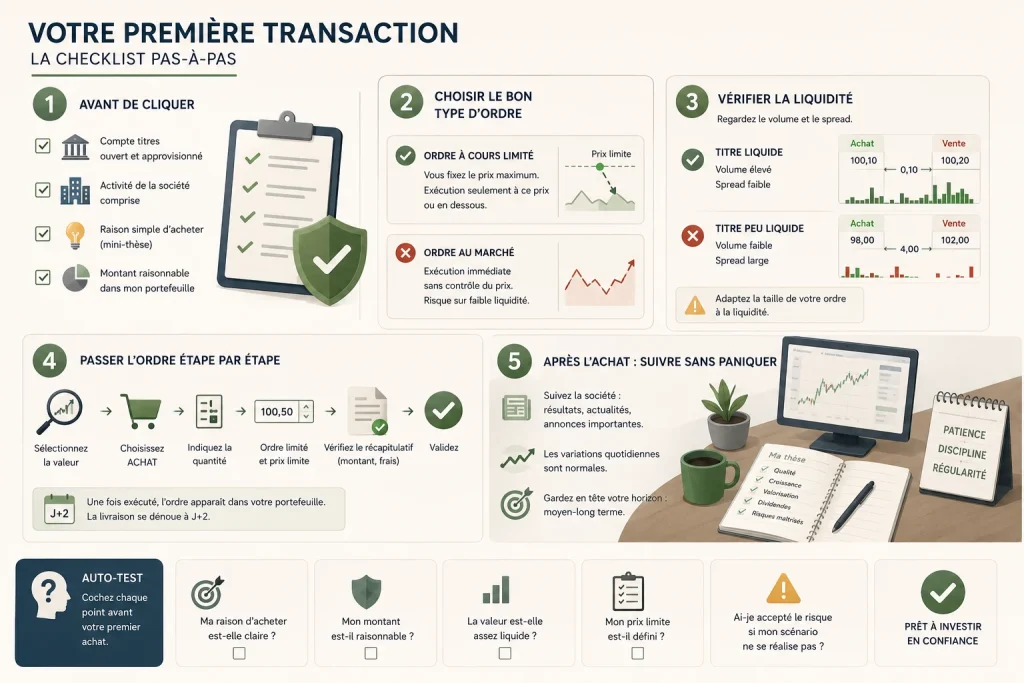
Avant de cliquer : les prérequis
- Compte titres ouvert et approvisionné auprès d’une SGB agréée AMMC.
- Vous avez lu la fiche Casabourse de la société visée (cours A-04) et compris son activité.
- Vous avez une raison écrite en une phrase dans votre journal (cours B-12) — ou la décision d’attendre.
- Le montant est modeste (souvent ≤ 5–10 % de l’épargne investissable au départ).
Les 7 étapes — sur votre valeur, pas sur un ticker imposé
Étape 1 — Ouvrir la fiche sur Casabourse
Repérez : dernier cours, variation du jour, fourchette 52 semaines, capitalisation, rendement dividende si pertinent. Exemple de lecture (juin 2026, à recalculer) : BCP ~241 MAD, capi ~49 Mds ; Disway ~790 MAD, volume ~59 titres/j — deux profils très différents pour la même checklist.
Étape 2 — Vérifier la liquidité (volume)
Le volume (titres/jour) indique si votre quantité passera sans déplacer le cours. Règle pratique débutant : viser une valeur avec volume suffisant pour votre taille d’ordre ; sur une micro-cap, même 50 actions peuvent être difficiles à revendre au bon prix.
| Profil liquidité (exemples Casabourse) | Volume indicatif | Conséquence pour un petit ordre |
|---|---|---|
| Très liquide (Cosumar) | ~78 743 titres/j | 10–100 actions : exécution généralement facile |
| Liquide (BCP) | ~8 130 titres/j | Ordre modeste OK ; vérifier le carnet |
| Peu liquide (Disway) | ~59 titres/j | Risque de spread large et sortie difficile |
Étape 3 — Observer le spread (bid / ask)
Consultez le carnet sur Casabourse ou la plateforme SGB. Si le spread dépasse ~1 % du cours, réduisez la taille ou reportez. C’est le coût caché de l’illiquidité.
Étape 4 — Choisir le type d’ordre
| Type | Fonctionnement | Première transaction |
|---|---|---|
| Ordre à cours limite | Prix maximum d’achat fixé par vous | Recommandé pour débuter |
| Ordre au marché | Exécution immédiate sans plafond | À éviter au début, surtout si peu liquide |
| Seuil de déclenchement | Activé à un cours cible | Plutôt après quelques ordres limite réussis |
Étape 5 — Simuler puis passer l’ordre sur la SGB
- Sélectionnez votre ticker (celui validé par la checklist).
- Achat · quantité · ordre limite · prix max (souvent légèrement au-dessus du ask).
- Vérifiez le récapitulatif : montant brut + courtage + TPCVM (cours frais & fiscalité).
- Validez seulement si les 7 cases ci-dessous sont cochées.
Étape 6 — Règlement-livraison T+2
Sur la BVC : exécution en séance (9h30–15h30) → titres crédités et espèces débitées en T+2 (2 jours ouvrés). Le dividende suit le calendrier de la société, pas T+2.
Étape 7 — Après l’ordre : suivre la société, pas le tick
Consultez les résultats, communiqués et actualités sectorielles — pas le cours minute par minute. Tenez une ligne dans votre journal : thèse, prix d’entrée, invalidation.
Checklist récapitulative — à cocher avant chaque ordre
| # | Vérification | Comment remplir | ☐ |
|---|---|---|---|
| 1 | Compte approvisionné | Solde ≥ montant + frais estimés | ☐ |
| 2 | Activité comprise | Une phrase sur le modèle économique | ☐ |
| 3 | Volume adapté | Quantité modeste vs volume/jour sur Casabourse | ☐ |
| 4 | Spread acceptable | Carnet consulté | ☐ |
| 5 | Ordre limite | Prix max fixé | ☐ |
| 6 | Frais intégrés | Point mort > frais aller-retour | ☐ |
| 7 | T+2 anticipé | Pas besoin des titres avant J+2 | ☐ |
Cas pratique BVC
Choisissez une valeur déjà dans votre watchlist (ou BCP / Disway pour l’exercice). Remplissez la checklist sur papier. Sur la plateforme SGB, simulez un ordre limite sans valider. Comparez dans le comparateur le volume de votre ligne avec une valeur plus liquide : la checklist est-elle toujours verte ?
Choisissez la bonne réponse pour chaque question et consultez votre résultat à la fin.
La réponse attendue privilégie une décision structurée : faits, méthode, risque et cohérence avec le portefeuille.
La réponse attendue privilégie une décision structurée : faits, méthode, risque et cohérence avec le portefeuille.
La réponse attendue privilégie une décision structurée : faits, méthode, risque et cohérence avec le portefeuille.
La réponse attendue privilégie une décision structurée : faits, méthode, risque et cohérence avec le portefeuille.
La réponse attendue privilégie une décision structurée : faits, méthode, risque et cohérence avec le portefeuille.
قبل النقر: المتطلبات الأساسية
- حساب أوراق مالية مفتوح ومموّل لدى SGB معتمدة من AMMC.
- قرأت بطاقة Casabourse للشركة المستهدفة (الدرس A-04) وفهمت نشاطها.
- لديك سبب مكتوب في جملة واحدة في مذكرتك (الدرس B-12) — أو قرار بالانتظار.
- المبلغ معتدل (غالباً ≤ 5–10% من الادّخار القابل للاستثمار في البداية).
الخطوات السبع — على قيمتك، لا على رمز مفروض
الخطوة 1 — فتح البطاقة على Casabourse
حدّد: آخر سعر، وتغيّر اليوم، ونطاق 52 أسبوعاً، والقيمة السوقية، وعائد التوزيع إن وُجد. مثال قراءة (يونيو 2026، أعِد الحساب): BCP ~241 درهم بقيمة سوقية ~49 مليار؛ وDisway ~790 درهم بحجم ~59 سهم/يوم — ملفان مختلفان جداً تنطبق عليهما قائمة التحقق نفسها.
الخطوة 2 — التحقق من السيولة (الحجم)
يُبيّن حجم التداول (أسهم/يوم) إن كانت كميتك ستمرّ دون تحريك السعر. وقاعدة عملية للمبتدئ: استهدف قيمة بحجم يكفي لحجم أمرك؛ فعلى قيمة صغيرة قد يصعب بيع حتى 50 سهماً بالسعر المناسب.
| ملف السيولة (أمثلة Casabourse) | الحجم الإرشادي | الأثر على أمر صغير |
|---|---|---|
| عالي السيولة جداً (كوسومار) | ~78,743 سهم/يوم | 10–100 سهم: تنفيذ سهل عموماً |
| سائل (BCP) | ~8,130 سهم/يوم | أمر معتدل مقبول؛ تحقّق من دفتر الأوامر |
| قليل السيولة (Disway) | ~59 سهم/يوم | خطر فارق سعري واسع وصعوبة في الخروج |
الخطوة 3 — مراقبة الفارق السعري (bid / ask)
راجِع دفتر الأوامر على Casabourse أو منصة SGB. فإن تجاوز الفارق ~1% من السعر، فقلّل الحجم أو أجّل؛ فهو التكلفة الخفية لضعف السيولة.
الخطوة 4 — اختيار نوع الأمر
| النوع | آلية العمل | المعاملة الأولى |
|---|---|---|
| أمر بسعر محدد (limit) | سقف أقصى للشراء تحدّده أنت | موصى به للبدء |
| أمر بسعر السوق | تنفيذ فوري دون سقف | يُتجنَّب في البداية، خاصةً إن كانت السيولة ضعيفة |
| أمر بعتبة تفعيل | يُفعَّل عند سعر مستهدف | بعد نجاح عدة أوامر limit |
الخطوة 5 — المحاكاة ثم تمرير الأمر على SGB
- اختر رمزك (الذي تحقّقت منه عبر القائمة).
- شراء · الكمية · أمر limit · سعر أقصى (غالباً قليلاً فوق ask).
- تحقّق من الملخص: المبلغ الإجمالي + الوساطة + TPCVM (درس الرسوم والضرائب).
- ولا تؤكّد إلا إذا كانت النقاط السبع أدناه محقّقة.
الخطوة 6 — التسوية والتسليم T+2
على BVC: يتم التنفيذ في الجلسة (9:30–15:30) → ثم تُضاف الأسهم ويُخصَم النقد في T+2 (يومَي عمل). أما توزيع الأرباح فيتبع رزنامة الشركة، لا T+2.
الخطوة 7 — بعد الأمر: تابِع الشركة، لا كل تغيّر في السعر
تابِع النتائج والبلاغات وأخبار القطاع — لا السعر دقيقةً بدقيقة. وسجّل سطراً في مذكرتك: الفرضية، وسعر الدخول، وشروط الإبطال.
قائمة تحقق تلخيصية — للتأشير قبل كل أمر
| # | التحقق | كيف تملؤها | ☐ |
|---|---|---|---|
| 1 | الحساب مموّل | الرصيد ≥ المبلغ + الرسوم التقديرية | ☐ |
| 2 | النشاط مفهوم | جملة عن النموذج الاقتصادي | ☐ |
| 3 | الحجم مناسب | كمية معتدلة مقابل الحجم/يوم على Casabourse | ☐ |
| 4 | الفارق مقبول | دفتر الأوامر مُراجَع | ☐ |
| 5 | أمر limit | سعر أقصى محدّد | ☐ |
| 6 | الرسوم مُدمَجة | نقطة التعادل > رسوم الذهاب والإياب | ☐ |
| 7 | T+2 متوقَّع | لا حاجة للأسهم قبل اليوم +2 | ☐ |
حالة عملية في BVC
اختر قيمة واحدة من قائمة مراقبتك (أو BCP / Disway للتمرين)، واملأ قائمة التحقق على الورق. وعلى منصة SGB، حاكِ أمر limit دون تأكيد. ثم قارن في المُقارِن حجم سطرك بقيمة أكثر سيولة: هل لا تزال قائمة التحقق كلها خضراء؟
اختر الإجابة الصحيحة لكل سؤال واطلع على نتيجتك في النهاية.
المعاملة الأولى تُحضَّر: الحساب، والتحليل، والمذكرة، وحجم مركز معقول.
كوسومار (~78,743 سهم/يوم) وDisway (~59 سهم/يوم) يُبيّنان لماذا يجب أن توجّه السيولةُ حجمَ الأمر.
أمر limit يحدّد سقف سعر الشراء ويتجنّب المفاجآت على القيم الأقل سيولة.
T+2 هو أجل التسوية والتسليم القياسي على بورصة الدار البيضاء.
الأفق المتوسط إلى الطويل يعتمد على الفرضية الأساسية، لا على كل تغيّر يومي.
Before you click: prerequisites
- Securities account open and funded with an AMMC-authorised brokerage firm (SGB).
- You have read the Casabourse fact sheet for the target company (lesson A-04) and understand its business.
- You have a written reason in one sentence in your journal (lesson B-12) — or the decision to wait.
- The amount is modest (often ≤ 5–10% of investable savings at the start).
The 7 steps — on your stock, not an imposed ticker
Step 1 — Open the fact sheet on Casabourse
Note: last price, daily change, 52-week range, market cap, dividend yield if relevant. Example read (June 2026, recalculate): BCP ~241 MAD, cap ~49 bn; Disway ~790 MAD, volume ~59 shares/day — two very different profiles for the same checklist.
Step 2 — Check liquidity (volume)
Volume (shares/day) indicates whether your quantity will trade without moving the price. Beginner rule of thumb: target a stock with sufficient volume for your order size; on a micro-cap, even 50 shares can be hard to sell at a fair price.
| Liquidity profile (Casabourse examples) | Indicative volume | Impact on a small order |
|---|---|---|
| Highly liquid (Cosumar) | ~78,743 shares/day | 10–100 shares: execution usually easy |
| Liquid (BCP) | ~8,130 shares/day | Modest order OK; check the order book |
| Thinly traded (Disway) | ~59 shares/day | Wide spread risk and difficult exit |
Step 3 — Observe the spread (bid / ask)
Check the order book on Casabourse or your SGB platform. If the spread exceeds ~1% of the price, reduce size or postpone. This is the hidden cost of illiquidity.
Step 4 — Choose order type
| Type | How it works | First transaction |
|---|---|---|
| Limit order | Maximum buy price set by you | Recommended for beginners |
| Market order | Immediate execution with no price cap | Avoid at first, especially if illiquid |
| Stop order | Triggered at a target price | Rather after a few successful limit orders |
Step 5 — Simulate then place the order on your SGB
- Select your ticker (the one validated by the checklist).
- Buy · quantity · limit order · max price (often slightly above the ask).
- Check the summary: gross amount + brokerage + TPCVM (see fees & tax lesson).
- Confirm only if the 7 boxes below are checked.
Step 6 — T+2 settlement
On the BVC: execution during the session (9:30 a.m.–3:30 p.m.) → shares credited and cash debited on T+2 (2 business days). Dividends follow the company’s calendar, not T+2.
Step 7 — After the order: follow the company, not the tick
Check earnings, press releases and sector news — not the price minute by minute. Keep a line in your journal: thesis, entry price, invalidation level.
Summary checklist — tick before every order
| # | Check | How to complete | ☐ |
|---|---|---|---|
| 1 | Account funded | Balance ≥ amount + estimated fees | ☐ |
| 2 | Business understood | One sentence on the business model | ☐ |
| 3 | Volume suitable | Modest quantity vs daily volume on Casabourse | ☐ |
| 4 | Spread acceptable | Order book checked | ☐ |
| 5 | Limit order | Max price set | ☐ |
| 6 | Fees included | Breakeven > round-trip fees | ☐ |
| 7 | T+2 anticipated | No need for shares before D+2 | ☐ |
Practical exercise on the BVC
Choose one stock already on your watchlist (or BCP / Disway for the exercise). Fill in the checklist on paper. On your SGB platform, simulate a limit order without confirming. Compare your line’s volume in the comparator with a more liquid stock: is the checklist still green?
Key takeaways
- First transaction = method, not a ticker imposed by the Academy.
- Volume + spread + limit order = non-negotiable trio for beginners.
- T+2 on the BVC — plan your cash flow.
- Next: advanced orders (Level B) after 2–3 successful limit orders.
Self-check
- What are the prerequisites before the first click?
- Why compare Cosumar and Disway for liquidity?
- Which order type for a beginner?
- What does T+2 mean?
- What to follow after the purchase?