
Comment se déroule une séance de Bourse au Maroc
كيف تسير جلسة البورصة في المغرب؟
How a trading session works in Morocco
Traduction en cours — contenu affiché en français.
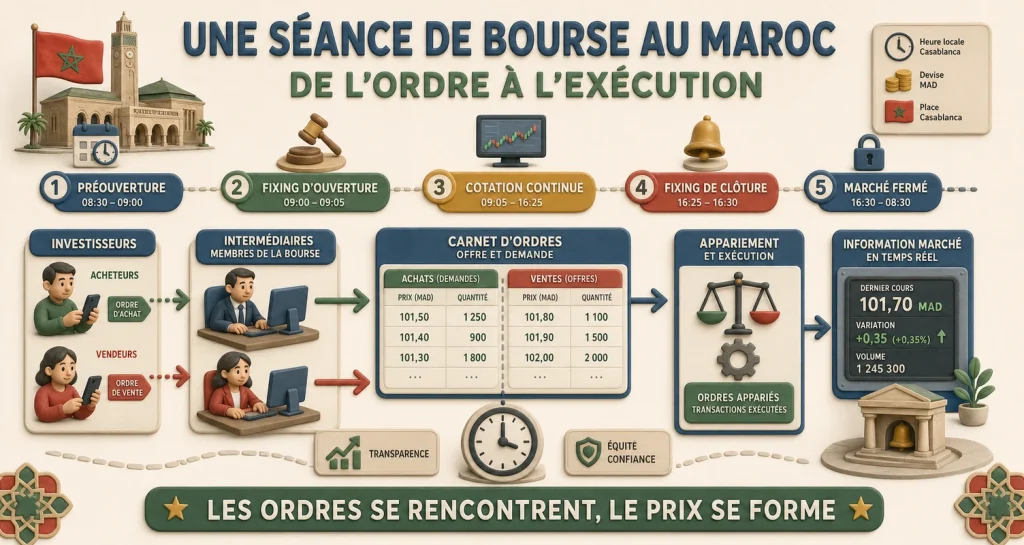
Quand la Bourse est-elle ouverte ?
La Bourse de Casablanca cote du lundi au vendredi, hors jours feries marocains. La seance principale s’etend de 9h00 a 15h30 (heure de Casablanca). En dehors de ces horaires, aucun ordre ne s’execute sur le marche centralise – votre courtier peut accepter des ordres en attente, mais ils ne seront traites qu’a la prochaine ouverture.
Timeline 9h-15h30 – les phases d’une seance
| Heure | Phase | Ce qui se passe | Exemple IAM (~91 MAD) |
|---|---|---|---|
| 8h30 – 9h00 | Pre-ouverture | Les ordres s’accumulent sans s’executer. Un cours theorique d’ouverture se dessine sur Casabourse. | Ordres d’achat a 91,20 et de vente a 91,50 s’empilent ; le carnet se remplit. |
| 9h00 | Fixing d’ouverture | Tous les ordres en attente sont confrontes en une fois → cours d’ouverture unique. | IAM ouvre a 91,35 MAD (exemple) : premier prix officiel de la seance. |
| 9h00 – 15h30 | Marche continu | Les ordres s’executent en temps reel des qu’acheteur et vendeur se rencontrent. C’est la phase la plus active pour les valeurs liquides. | IAM s’echange en continu : volume moyen ~44 070 titres/jour, reparti sur la seance. |
| 15h15 – 15h30 | Pre-cloture | Accumulation des ordres pour le fixing de cloture. Le volume accelere souvent. | Les fonds et investisseurs institutionnels passent leurs ordres de fin de journee. |
| 15h30 | Fixing de cloture | Confrontation finale → cours de cloture, reference du lendemain et base de calcul des indices MASI/MSI 20. | IAM cloture a 91,40 MAD ; cette valeur sert de reference pour la variation du lendemain. |
Fixing vs marche continu
Deux modes de cotation coexistent a la BVC :
- Fixing : tous les ordres sont confrontes en une fois a un instant donne (ouverture, cloture, et valeurs peu liquides en seance). Un cours unique en ressort.
- Marche continu : execution en temps reel, des qu’un prix acheteur egale un prix vendeur. C’est le mode des valeurs les plus echangees comme IAM, ATW ou Addoha.
Sur une valeur liquide, la majorite du volume transite en continu ; le fixing d’ouverture et de cloture ajoute un pic de transactions concentrees.
Focus : le pic de volume en cloture sur IAM
Sur Maroc Telecom, le volume quotidien moyen est d’environ 44 070 titres/jour (donnees Casabourse, juin 2026). Ce volume n’est pas reparti uniformement : une part significative se concentre autour du fixing de cloture (15h30).
Pourquoi ? Les gestionnaires de fonds (OPCVM, assurances) doivent valoriser leur portefeuille au cours de cloture officiel. Ils passent souvent leurs ordres d’ajustement dans les 15 dernieres minutes. Resultat : sur Casabourse, vous observez frequemment un pic de volume entre 15h15 et 15h30 sur IAM – parfois 20 a 30 % du volume journalier en un quart d’heure.
Meme logique sur Cosumar (CSR) (~179 MAD, volume ~2 500-4 000 titres/jour) : moins liquide qu’IAM, le fixing de cloture pese encore plus lourd dans le volume total. Sur une valeur illiquide, un ordre passe a 15h28 peut deplacer le cours de cloture – un piege pour le debutant presse.
Seuils de variation et reservations
Pour eviter les mouvements extremes, le cours d’une valeur ne peut varier que dans une fourchette autorisee sur la seance (seuils fixes par la BVC). Si la demande ou l’offre pousse au-dela, la valeur est temporairement reservee (suspendue) avant de reprendre. C’est un garde-fou, pas un signal d’alarme – IAM y est rarement confrontee grace a sa liquidite.
Reglement-livraison T+2
Quand votre ordre est execute en seance (par exemple achat IAM a 91,40 a 14h22), le transfert effectif des titres et de l’argent a lieu deux jours ouvres plus tard (T+2). Vous etes engage des l’execution, mais la livraison se denoue a J+2. Ordre execute mardi → titres credites jeudi sur votre compte-titres.
Cas pratique BVC
Un jour de seance, ouvrez la fiche IAM sur Casabourse a 10h, puis a 15h25. Comparez le volume cumule : notez l’acceleration en fin de seance. Faites la meme observation sur Cosumar. Ensuite, comparez la liquidite des deux valeurs dans le comparateur : volume moyen, capitalisation, spread. Vous comprendrez pourquoi il vaut mieux passer un ordre IAM en milieu de seance qu’une micro-cap a 15h28.
Choisissez la bonne réponse pour chaque question et consultez votre résultat à la fin.
La réponse attendue privilégie une décision structurée : faits, méthode, risque et cohérence avec le portefeuille.
La réponse attendue privilégie une décision structurée : faits, méthode, risque et cohérence avec le portefeuille.
La réponse attendue privilégie une décision structurée : faits, méthode, risque et cohérence avec le portefeuille.
La réponse attendue privilégie une décision structurée : faits, méthode, risque et cohérence avec le portefeuille.
La réponse attendue privilégie une décision structurée : faits, méthode, risque et cohérence avec le portefeuille.
متى تكون البورصة مفتوحة؟
تفتح بورصة الدار البيضاء للتداول من الاثنين إلى الجمعة، باستثناء العطل الرسمية المغربية. وتمتد الجلسة الرئيسية من 9:00 إلى 15:30 (بتوقيت الدار البيضاء). وخارج هذه الأوقات لا يُنفَّذ أي أمر في السوق المركزي؛ فقد يقبل وسيطك أوامر معلّقة، لكنها لا تُعالَج إلا في الافتتاح التالي.
الجدول الزمني 9:00–15:30 — مراحل الجلسة
| الوقت | المرحلة | ما يحدث | مثال IAM (~91 درهم) |
|---|---|---|---|
| 8:30 – 9:00 | ما قبل الافتتاح | تتراكم الأوامر دون أن تُنفَّذ، ويتشكّل سعر افتتاح نظري على Casabourse. | تتراكم أوامر شراء عند 91,20 وأوامر بيع عند 91,50، ويمتلئ دفتر الأوامر. |
| 9:00 | fixing الافتتاح | تُطابَق كل الأوامر المعلّقة دفعة واحدة → سعر افتتاح موحّد. | تفتتح IAM عند 91,35 درهم (مثال): أول سعر رسمي في الجلسة. |
| 9:00 – 15:30 | السوق المستمر | تُنفَّذ الأوامر لحظياً بمجرد تلاقي المشتري والبائع، وهي أكثر المراحل نشاطاً بالنسبة للقيم السائلة. | يتداول IAM باستمرار: حجم يومي ~44,070 سهم، موزّع على الجلسة. |
| 15:15 – 15:30 | ما قبل الإغلاق | تتراكم الأوامر استعداداً لـ fixing الإغلاق، ويتسارع الحجم غالباً. | تمرّر الصناديق والمستثمرون المؤسسيون أوامر نهاية اليوم. |
| 15:30 | fixing الإغلاق | مطابقة نهائية → سعر الإغلاق، وهو مرجع اليوم التالي وأساس حساب مؤشرات MASI/MSI 20. | تُغلق IAM عند 91,40 درهم؛ وتصبح هذه القيمة مرجعاً لحساب التغير في اليوم التالي. |
fixing مقابل السوق المستمر
يتعايش في BVC نمطان للتسعير:
- fixing: تُطابَق كل الأوامر دفعة واحدة في لحظة محدّدة (الافتتاح، والإغلاق، والقيم قليلة السيولة أثناء الجلسة)، فيخرج منها سعر واحد.
- السوق المستمر: تنفيذ لحظي بمجرد أن يتساوى سعر المشتري مع سعر البائع، وهو نمط القيم الأكثر تداولاً مثل IAM وATW وAddoha.
في القيمة السائلة يمرّ معظم الحجم عبر السوق المستمر، بينما يضيف fixing الافتتاح والإغلاق ذروة من المعاملات المركّزة.
تركيز: ذروة الحجم عند إغلاق IAM
في اتصالات المغرب، يبلغ متوسط الحجم اليومي نحو 44,070 سهم/يوم (بيانات Casabourse، يونيو 2026). وهذا الحجم لا يتوزّع بالتساوي؛ إذ يتركّز جزء معتبر منه حول fixing الإغلاق (15:30).
لماذا؟ لأن مديري الصناديق (OPCVM، وشركات التأمين) مُلزَمون بتقييم محافظهم بسعر الإغلاق الرسمي، فيمرّرون غالباً أوامر التعديل في الدقائق الـ15 الأخيرة. والنتيجة أنك تلاحظ كثيراً على Casabourse ذروةً في الحجم بين 15:15 و15:30 على IAM — تبلغ أحياناً 20 إلى 30% من حجم اليوم في ربع ساعة.
والمنطق نفسه ينطبق على كوسومار (CSR) (~179 درهم، بحجم ~2,500–4,000 سهم/يوم): فلأنها أقل سيولة من IAM، يكون وزن fixing الإغلاق في حجمها الإجمالي أكبر. وفي القيمة غير السائلة، قد يحرّك أمرٌ يُمرَّر عند 15:28 سعرَ الإغلاق — وهو فخ للمبتدئ المتسرّع.
عتبات التغير والحجز
لتفادي التحركات المتطرفة، لا يمكن لسعر القيمة أن يتغيّر إلا ضمن نطاق مسموح به خلال الجلسة (عتبات تحدّدها BVC). فإذا دفع الطلب أو العرض السعرَ إلى ما وراء هذا النطاق، تُحجَز القيمة مؤقتاً (تُعلَّق) ثم تستأنف. وهو إجراء وقائي لا إنذار؛ وقلّما تواجهه IAM بفضل سيولتها.
التسوية والتسليم T+2
عند تنفيذ أمرك في الجلسة (مثلاً شراء IAM عند 91,40 على الساعة 14:22)، لا يتم النقل الفعلي للأسهم والمال إلا بعد يومَي عمل (T+2). فأنت مُلتزِم منذ لحظة التنفيذ، لكن التسليم لا يُحسَم إلا في J+2: أمرٌ يُنفَّذ يوم الثلاثاء → تُقيَّد الأسهم في حسابك يوم الخميس.
حالة عملية في BVC
في أحد أيام التداول، افتح بطاقة IAM على Casabourse على الساعة 10:00، ثم على الساعة 15:25، وقارِن الحجم التراكمي ولاحِظ تسارعه في نهاية الجلسة. كرّر الملاحظة نفسها على كوسومار. ثم قارِن سيولة القيمتين في مُقارِن Casabourse من حيث متوسط الحجم والقيمة السوقية والفارق (spread). عندها ستفهم لماذا يُفضَّل تمرير أمر على IAM في منتصف الجلسة بدل قيمة صغيرة (micro-cap) عند 15:28.
اختر الإجابة الصحيحة لكل سؤال واطلع على نتيجتك في النهاية.
fixing الإغلاق عند 15:30 يحدّد سعر الإغلاق الرسمي المرجعي لليوم التالي وللمؤشرات.
fixing يُنتج سعراً واحداً في لحظة محدّدة، أما المستمر فينفّذ على مدار الجلسة.
المستثمرون المؤسسيون يمرّرون أوامر نهاية اليوم ليُقيَّموا بسعر الإغلاق — ومن هنا تأتي ذروة الحجم.
الحجز إجراء وقائي ضد التحركات المتطرفة، وتستأنف القيمة التداول بعد تعليق قصير.
التسوية والتسليم تتمّان بعد يومَي عمل من تنفيذ الأمر في BVC.
When is the exchange open?
The Casablanca Stock Exchange trades Monday to Friday, excluding Moroccan public holidays. The main session runs from 9:00 to 15:30 (Casablanca time). Outside these hours, no order executes on the central market — your broker may accept pending orders, but they are processed only at the next open.
Timeline 9:00–15:30 — phases of a session
| Time | Phase | What happens | IAM example (~91 MAD) |
|---|---|---|---|
| 8:30 – 9:00 | Pre-open | Orders accumulate without executing. A theoretical opening price forms on Casabourse. | Buy orders at 91.20 and sells at 91.50 stack up; the book fills. |
| 9:00 | Opening auction (fixing) | All pending orders are matched at once → single opening price. | IAM opens at 91.35 MAD (example): first official price of the session. |
| 9:00 – 15:30 | Continuous trading | Orders execute in real time as soon as buyer and seller meet. Most active phase for liquid names. | IAM trades continuously: average volume ~44,070 shares/day, spread across the session. |
| 15:15 – 15:30 | Pre-close | Orders accumulate for the closing auction (fixing). Volume often accelerates. | Funds and institutional investors place end-of-day orders. |
| 15:30 | Closing auction (fixing) | Final matching → closing price, reference for the next day and base for MASI/MSI 20 indices. | IAM closes at 91.40 MAD; this value is the reference for the next day’s change. |
Fixing vs continuous trading
Two quoting modes coexist at the BVC:
- Fixing (auction): all orders are matched at once at a given moment (open, close, and less liquid names during the session). A single price results.
- Continuous trading: real-time execution as soon as a bid equals an ask. This is the mode for the most traded names like IAM, ATW or Addoha.
On a liquid name, most volume trades continuously; opening and closing auctions add concentrated transaction spikes.
Focus: closing volume spike on IAM
On Maroc Telecom, average daily volume is about 44,070 shares/day (Casabourse data, June 2026). This volume is not evenly spread: a significant share concentrates around the closing auction (15:30).
Why? Fund managers (mutual funds (OPCVM), insurers) must mark portfolios to the official closing price. They often place adjustment orders in the last 15 minutes. Result: on Casabourse, you frequently see a volume spike between 15:15 and 15:30 on IAM — sometimes 20 to 30% of daily volume in a quarter of an hour.
Same logic on Cosumar (CSR) (~179 MAD, volume ~2,500–4,000 shares/day): less liquid than IAM, the closing auction weighs even more heavily in total volume. On an illiquid name, an order at 15:28 can move the closing price — a trap for the rushed beginner.
Price limits and reservations
To avoid extreme moves, a stock’s price can move only within an authorised band during the session (limits set by the BVC). If demand or supply pushes beyond, the stock is temporarily reserved (suspended) before resuming. This is a safeguard, not an alarm signal — IAM rarely faces this thanks to its liquidity.
Settlement-delivery T+2
When your order executes in session (e.g. buy IAM at 91.40 at 14:22), the actual transfer of shares and cash takes place two business days later (T+2). You are committed from execution, but delivery settles at D+2. Order executed Tuesday → shares credited Thursday in your securities account.
Practical exercise on the BVC
On a trading day, open the IAM page on Casabourse at 10:00, then at 15:25. Compare cumulative volume: note the acceleration near the close. Repeat on Cosumar. Then compare the two names’ liquidity in the comparator: average volume, market cap, spread. You will understand why it is better to place an IAM order mid-session than a micro-cap at 15:28.
Key takeaways
- BVC session: 9:00–15:30, Monday–Friday.
- Pre-open → fixing 9:00 → continuous → pre-close → fixing 15:30.
- Volume often peaks between 15:15 and 15:30 (closing auction).
- IAM (~44,070 shares/day) absorbs orders easily; Cosumar less so.
- Settlement-delivery T+2: shares credited 2 business days after execution.
Self-check
- At what time does the closing auction (fixing) take place at the BVC?
- What is the difference between fixing and continuous trading?
- Why does volume often rise between 15:15 and 15:30?
- What happens when a stock exceeds its price limit?
- When is the share transfer effective after execution?